Abstract Patterns Featuring Seamless: A Practical Guide to Digital Texture and Design Application
In the contemporary landscape of digital design, visual assets are rarely static. They are dynamic components that require scalability, adaptability, and aesthetic coherence across various mediums. Among the most versatile tools available to designers, illustrators, and content creators is the category of Abstract Patterns Featuring Seamless tiling capabilities. These assets represent a significant shift from rigid, geometric repetition toward organic, vibrant, and texturally rich compositions that maintain continuity regardless of how they are tiled or scaled.
For professionals aged 20 to 50 who are evaluating design resources, understanding the technical and aesthetic nuances of seamless abstract patterns is essential. This article provides a comprehensive evaluation of these assets, comparing them against alternative design approaches, analyzing their technical specifications—such as high-resolution JPEG formats at 300 dpi—and exploring the practical tradeoffs involved in their use. By examining the distinct characteristics of vibrant abstract designs, readers can make informed decisions about when and how to integrate these patterns into their projects.
Defining the Asset: What Makes Abstract Patterns Unique?
To evaluate any design resource, one must first understand its core mechanics. A seamless pattern is defined by its ability to repeat indefinitely without visible seams or breaks. However, not all seamless patterns are created equal. Traditional seamless patterns often rely on strict geometric symmetry or predictable motifs, which can sometimes result in a monotonous or dated appearance. In contrast, Abstract Patterns Featuring Seamless properties leverage complex, non-representational forms to create depth and interest.
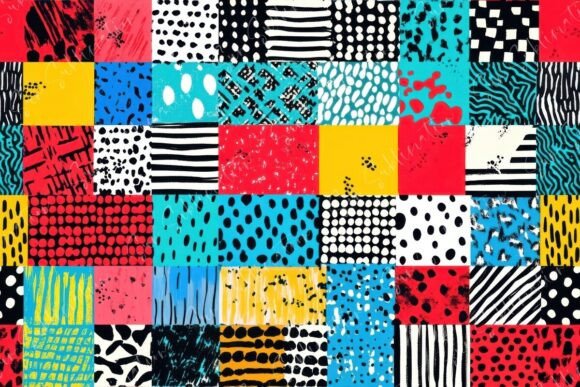
The defining characteristic of this specific category is the combination of vibrant color combinations and textures. Unlike flat vector illustrations, these patterns often simulate physical textures—such as brush strokes, fabric weaves, or fluid dynamics—while maintaining the mathematical precision required for seamless tiling. This duality allows designers to achieve a hand-crafted, artistic feel with the efficiency of digital automation.
When you encounter an asset described as "playful," it typically refers to the irregularity of the shapes and the unpredictability of the color transitions. This playfulness prevents the eye from becoming fatigued during prolonged viewing, a critical factor in web design, packaging, and editorial layouts where user engagement is paramount. The absence of a watermark in high-quality digital downloads ensures that the integrity of the original artist’s work is preserved, allowing for unobstructed integration into commercial projects.
Technical Specifications and Format Considerations
Evaluating a digital asset requires more than just an aesthetic judgment; it demands a review of technical specifications. The standard for professional print and high-resolution digital display often hinges on resolution and file format. Many premium abstract patterns are offered in JPEG format at a size of 4500 x 3000 pixels with a resolution of 300 dpi.
- Resolution (300 dpi): This dots-per-inch metric is the industry standard for high-quality printing. It ensures that when the pattern is applied to physical products such as textiles, stationery, or promotional materials, the image remains crisp and free of pixelation. For digital-only applications, this resolution may exceed requirements, but it provides flexibility for future-proofing designs.
- Dimensions (4500 x 3000 pixels): These dimensions offer a substantial canvas for detail. A higher pixel count allows for intricate textures to be rendered clearly. When scaling down for mobile interfaces, the excess data ensures that the pattern does not lose its fine details, whereas smaller files might appear muddy when reduced.
- File Format (JPEG): JPEG is a universally compatible format. While it uses lossy compression, modern encoding standards minimize visible artifacts, especially in high-bit-depth images. For users requiring immediate download and ease of access across various software platforms (Adobe Creative Cloud, Canva, Affinity Suite), JPEG offers a balance between file size manageability and visual fidelity.
It is important to note that these assets are digital-only. After purchase, users receive a zipped file containing the high-resolution image. There is no physical product shipped, which streamlines the acquisition process but places the responsibility of quality control on the buyer. Understanding these technical parameters helps designers determine if the asset fits within their existing workflow and production pipeline.
Comparative Analysis: Seamless Abstracts vs. Other Design Approaches
When selecting background elements or decorative motifs, designers often face a choice between several categories: solid colors, photographic overlays, vector geometric patterns, and abstract seamless textures. Each approach has distinct strengths and limitations.
Versus Geometric Vector Patterns
Geometric patterns offer precision and clean lines, making them ideal for corporate branding or minimalist interfaces. However, they can lack emotional resonance and may appear too sterile for creative or lifestyle-oriented brands. Abstract Patterns Featuring Seamless qualities provide a warmer, more organic alternative. The vibrant color combinations introduce energy and movement that rigid geometry often lacks. The tradeoff is that abstract patterns can be visually busier, requiring careful management of negative space to avoid overwhelming the primary content.
Versus Photographic Overlays
Photographs offer realism but lack the controlled repetition of a pattern. Using a photo as a background often requires blurring or opacity adjustments to ensure text legibility. Seamless abstract patterns, by contrast, are designed specifically for repetition. They allow for large-scale coverage without the distracting focal points inherent in photography. Furthermore, because abstract patterns are generated rather than captured, they offer greater consistency in lighting and texture across different sections of a design.
Versus Flat Color Blocks
Solid colors are the safest option for readability but can lead to visual fatigue in long-form content. Abstract patterns add depth and context without compromising legibility, provided they are used correctly. The key advantage here is brand personality. A well-chosen abstract pattern can communicate creativity, innovation, or playfulness instantly, whereas a flat color relies entirely on typography and layout to convey tone.
Decision Factors: When to Choose Abstract Seamless Patterns
Selecting the right visual asset depends on the specific goals of the project. Abstract Patterns Featuring Seamless attributes are particularly well-suited for scenarios where versatility and aesthetic impact are prioritized over strict minimalism.
Ideal Use Cases
- Packaging Design: The 300 dpi resolution makes these patterns ideal for printed packaging. The vibrant textures can mimic premium materials like silk, marble, or brushed metal, adding perceived value to a product.
- Web Backgrounds: For landing pages or portfolio sites, an abstract pattern can serve as a subtle backdrop that enhances visual interest without distracting from calls-to-action. The seamless nature ensures that the background tiles perfectly across different screen sizes.
- Fashion and Textiles: The playful color combinations are highly relevant in fashion design. Digital prints derived from these patterns can be transferred to fabrics, leveraging the seamless tile for continuous garment prints.
- Editorial Layouts: Magazines and digital publications often use abstract textures to break up text-heavy pages, providing visual relief and guiding the reader’s eye through the content.
Limitations and Tradeoffs
Despite their versatility, these patterns are not a universal solution. Their complexity means they require more sophisticated handling than solid colors. Designers must consider contrast ratios carefully; a vibrant pattern may clash with bold typography if not managed with sufficient spacing or overlay effects. Additionally, while the digital file is high quality, the final output depends heavily on the medium. As noted in standard disclaimers for digital art, monitor calibration varies widely. The colors viewed on screen may differ from the actual printed product due to differences in color profiles (RGB vs. CMYK). This discrepancy is a crucial consideration for print-on-demand services or large-format printing, where color proofing is essential.
Evaluating the User Experience and Accessibility
The accessibility of these assets is a significant factor in their adoption. The availability of immediate download after purchase eliminates shipping delays and costs, appealing to freelancers and agencies working under tight deadlines. The provision of a zipped file ensures that the high-resolution JPEG is protected and organized, reducing the risk of corruption or incomplete downloads.
However, users must be aware of the limitations of digital previewing. Since all gadget monitors display colors differently, relying solely on the thumbnail or preview image can lead to mismatched expectations. Professional advice suggests requesting a sample print or using calibrated monitors when possible. This step is particularly important when the vibrant color combinations are central to the brand identity. The variation in display technology—from OLED screens to LCD panels—can alter the saturation and hue of the abstract textures, potentially affecting the overall mood of the design.
Conclusion: Making an Informed Choice
The decision to incorporate Abstract Patterns Featuring Seamless qualities into a design project should be driven by a clear understanding of the desired aesthetic and functional outcomes. These assets offer a compelling middle ground between the rigidity of geometry and the unpredictability of photography. Their high resolution, vibrant textures, and seamless tiling capabilities make them valuable tools for a wide range of creative applications.
By recognizing the technical specifications, such as the 4500 x 3000 pixel dimension and 300 dpi resolution, designers can better assess the asset’s suitability for both digital and print media. Comparing these patterns against alternatives reveals their unique strength in adding organic depth and visual interest. While they require careful management of contrast and color accuracy, their ability to enhance brand personality and user engagement makes them a worthwhile investment for serious creatives. Ultimately, the choice depends on balancing the need for visual impact with the practical constraints of production, ensuring that the final output aligns with the intended vision.