3D Glass Flowers Seamless Patterns: A Practical Guide to Enhancing Your Creative Projects
The world of digital design and crafting is evolving rapidly, with seamless patterns becoming a staple for professionals and hobbyists alike. Among the most versatile are 3D Glass Flowers Seamless Patterns, which offer an elegant and modern aesthetic that can elevate a wide range of creative outputs. These patterns are not just decorative—they serve as functional elements in workflows across various industries, from marketing and education to DIY crafts and stationery design.
What Are 3D Glass Flowers Seamless Patterns?
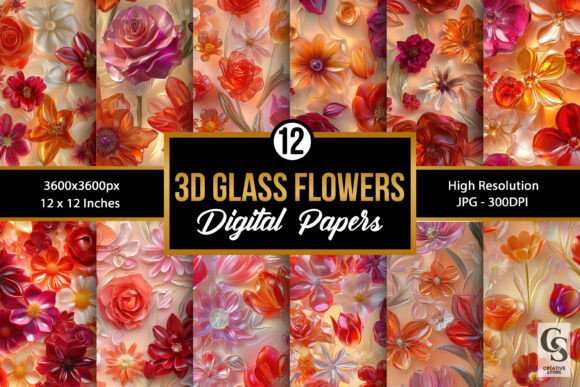
3D Glass Flowers Seamless Patterns are high-resolution digital designs featuring stylized glass flowers rendered in three dimensions. The patterns are created so that they can repeat seamlessly without visible edges or distortions, making them ideal for tiling across any surface. This particular collection includes 12 digital papers within a single zip file, all in JPG format at 300dpi resolution and sized at 3600 x 3600 pixels (or 12” x 12”). These specifications ensure clarity and sharpness whether printed or used digitally.
Where Do They Fit Into the Broader Creative Process?
In many creative projects, especially those involving print or digital media, background elements play a critical role in setting the tone and enhancing visual appeal. 3D Glass Flowers Seamless Patterns fit into this space by providing a ready-to-use asset that requires minimal effort to integrate while delivering maximum impact. Whether you're designing a product package, creating social media content, or working on a personal journal, these patterns streamline the process by eliminating the need to manually create or adjust floral backgrounds.
Before Starting a Project
During the planning phase of your project, it’s important to consider how visual elements will support your message or brand. 3D Glass Flowers Seamless Patterns can be part of your pre-production checklist when choosing assets for print materials, web graphics, or even interior design. Their transparent, glass-like appearance allows for easy layering over text or other imagery, ensuring readability and cohesion.
For example, if you’re preparing a set of greeting cards for a seasonal campaign, including these patterns early on helps maintain a consistent theme across all designs. You might also use them during brainstorming sessions to visualize how floral accents could complement your color scheme or typography choices.
During Execution
Once you begin building your project, 3D Glass Flowers Seamless Patterns can be applied directly in design software such as Adobe Photoshop, Illustrator, or Canva. Because they are seamless, they can be tiled effortlessly to cover larger areas like gift wrap sheets, notebook covers, or website headers. Their high-resolution JPG format ensures that the final output remains crisp and professional, regardless of where or how they’re used.
Here’s a practical workflow tip: When using these patterns in layered projects, place them beneath text or main visuals and reduce their opacity slightly. This approach allows the floral elements to act as subtle accents rather than overwhelming the primary content. It also gives your design a polished look, which is essential for maintaining professionalism in business-related work.
After Completion
Post-project integration is where these patterns shine. Once your design is finalized, they can be repurposed across multiple platforms. For instance, if you designed a planner layout, you can reuse the pattern in related promotional materials such as blog banners or email newsletters. Their adaptability makes them a valuable resource for long-term brand consistency and cross-platform visual harmony.
Use Cases and Implementation Ideas
- Gift Wrapping: Use the patterns as printable wrapping paper or digital templates for custom gift bags.
- Greeting Cards: Add depth and elegance by incorporating the floral designs into card backgrounds or overlays.
- Planners & Journals: These patterns make excellent page dividers or border elements in bullet journals and planners.
- Invitations: Elevate event invites by using the patterns as a base or accent design, especially for weddings, birthdays, or corporate events.
- Scrapbook Decorations: Print and cut out sections for collages, or use digitally to enhance photo layouts.
- DIY Projects: Ideal for customizing home décor items like candle holders, coasters, or framed prints.
- Stationery: Apply to letterheads, envelopes, or notecards for a refined, artistic touch.
- Backgrounds & Wallpapers: Perfect for websites, mobile apps, or desktop backgrounds where a soft, floral aesthetic is desired.
- Wall Art: Create large-scale prints for murals or canvas art, especially in spaces like offices or boutique shops.
- Tumbler Wraps: With their high-quality resolution, the patterns print beautifully on tumblers, mugs, or drinkware.
- Notebook Covers: Add sophistication to notebooks or binders with custom-printed covers using these designs.
How to Organize and Use These Files Effectively
With 12 different digital papers included in one zip file, organization is key to maximizing efficiency. Start by extracting the files and renaming each according to its visual style—such as “Glass Roses,” “Crystal Petals,” or “Iridescent Bloom.” This step simplifies future access and ensures you can quickly find the right pattern for your specific task.
Consider storing the files in a dedicated folder labeled something like “Seamless Floral Assets – 3D Glass Flowers” within your design library. If you frequently collaborate with others, sharing this folder via cloud storage or internal drives keeps everyone aligned and reduces redundant downloads or file transfers.
Compatibility and Usability
These patterns are compatible with most design tools due to their standard JPG format. However, for advanced editing, consider opening them in vector-based software like Illustrator to experiment with layer blending modes or transparency effects. Additionally, since they’re 12” x 12” at 300dpi, they’re well-suited for both screen and print applications. Always confirm the intended use before selecting a pattern—some may have more intricate details that are best suited for digital displays, while others offer simpler repetition for printed materials.
Integrating Into Business and Personal Workflows
For entrepreneurs and small business owners, 3D Glass Flowers Seamless Patterns can become part of your brand identity toolkit. Think of them as modular components that can be reused across packaging, social media posts, or branded merchandise. By having a cohesive visual language, you build stronger recognition and trust with your audience.
Marketers might use these patterns to create visually engaging campaigns, especially around holidays or product launches. Educators and bloggers can incorporate them into presentations or blog headers to add a touch of creativity without distracting from the core message. Freelancers and publishers benefit from having reusable assets that align with client aesthetics, saving time and effort in revisions.
Workflow Example for Product Packaging
- Define your brand colors and fonts for the packaging.
- Select the appropriate 3D Glass Flowers Seamless Pattern that complements the palette.
- Open the pattern in your design software and scale it to fit the dimensions of the packaging template.
- Adjust the layer opacity and position to ensure the product information remains legible.
- Export the final design in the required format and send it to print or upload for online sales.
This example illustrates how the patterns function within a structured workflow. They don’t replace strategic thinking but rather support it by offering a reliable and stylish visual component.
Practical Tips for Long-Term Use
To get the most out of your 3D Glass Flowers Seamless Patterns, keep the following tips in mind:
- Version Control: Maintain a backup copy of the original zip file and label edited versions clearly for reference.
- Quality Assurance: Always preview the pattern at actual size before printing to check for clarity and alignment.
- Consistency: Use the same pattern family across all related materials to maintain a unified brand or project identity.
- Storage: Group the patterns under a shared naming convention to avoid confusion and improve searchability.
- Layer Management: In complex designs, keep the pattern on its own layer so it can be easily toggled on/off or adjusted later.
Enhancing Creativity Without Overcomplication
One of the biggest advantages of 3D Glass Flowers Seamless Patterns is that they simplify the creative process. Instead of spending hours sourcing or creating floral textures, you can instantly apply one of these professionally designed options. This saves time and energy, allowing you to focus on other aspects of your project such as messaging, branding, or technical execution.
However, don’t let their ease of use lead to complacency. Consider how each pattern interacts with your overall design—contrast, spacing, and balance still matter. Even though the pattern is seamless, improper scaling or placement can introduce unintended visual clutter.
Real-World Applications and Outcomes
Many users report that adding 3D Glass Flowers Seamless Patterns to their projects results in a more polished and aesthetically pleasing outcome. Bloggers use them as post headers to draw attention to seasonal content. Stationery designers include them in note card sets to create a luxury feel. Marketers use them in promotional emails to evoke a sense of elegance and care.
The outcome isn’t just about beauty—it’s about usability and engagement. A clean, attractive design increases user interaction, improves readability, and enhances perceived value. That’s why professionals in fields like graphic design, publishing, and e-commerce often rely on such assets to maintain quality and consistency across their outputs.
Final Thoughts on Implementation
When integrating 3D Glass Flowers Seamless Patterns into your workflow, start by identifying where they can add value without complicating the process. Use them strategically—whether as background layers, texture overlays, or standalone design elements. Their versatility means you can explore different applications without compromising quality or efficiency.
By keeping your files organized, understanding compatibility requirements, and applying them thoughtfully, you’ll unlock new possibilities in your creative projects. These patterns aren’t just a quick fix; they’re a valuable addition to your design arsenal that can be leveraged across multiple tasks and platforms.